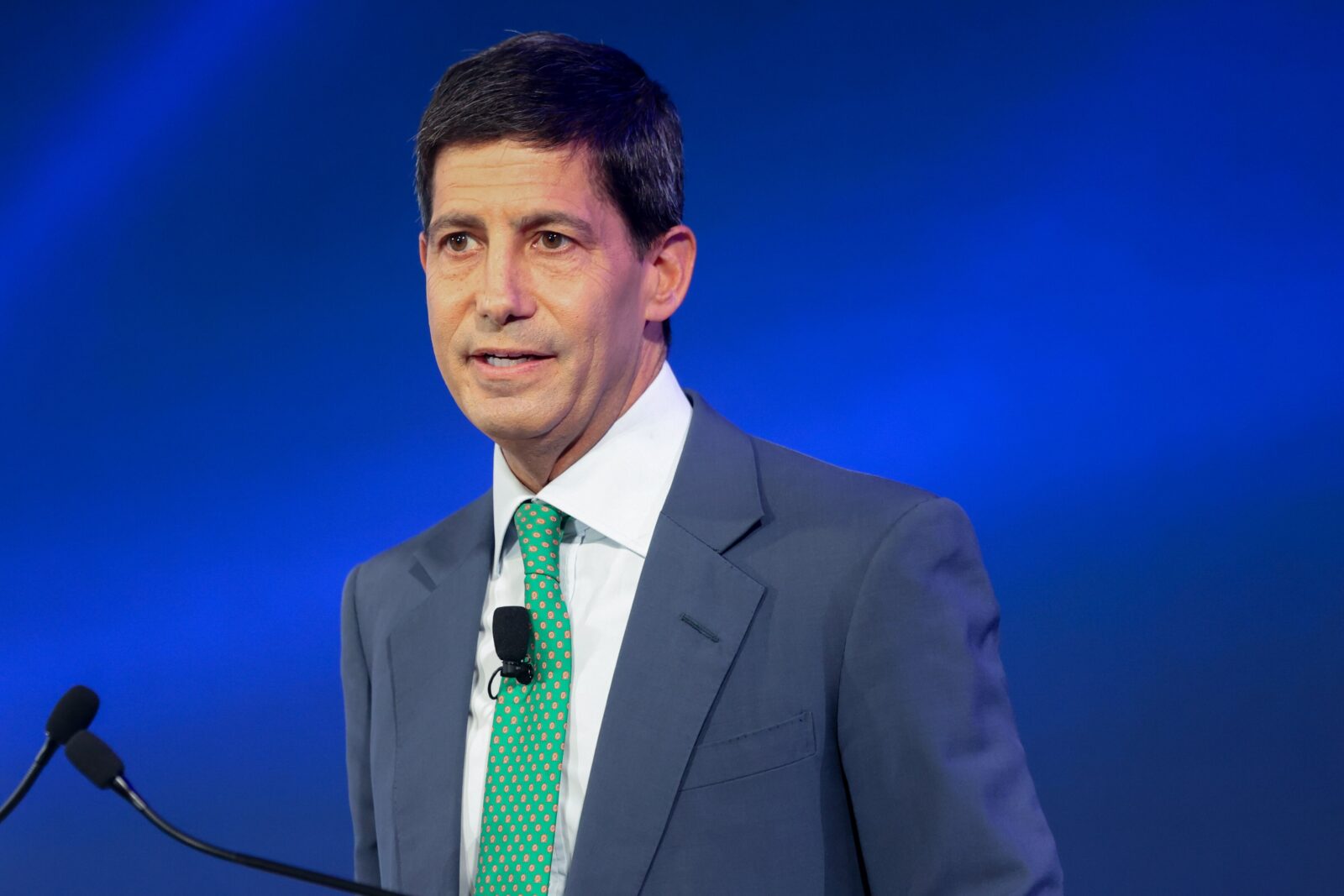
Kevin Warsh came to Washington promising a new chapter for the Federal Reserve. On Wednesday, in his first policy meeting as chairman, he began writing it — and the opening pages were hawkish. The Fed held its benchmark interest rate steady in the 4.25%–4.50% range for a fourth consecutive meeting, but the accompanying economic projections made clear that the status quo has a shelf life: nine of the committee's nineteen members now anticipate a rate increase before the end of 2026.
Markets did not take the signal kindly. The Dow Jones Industrial Average shed 507 points, or 0.98%. The S&P 500 fell 1.21% and the Nasdaq dropped 1.34%. Two-year Treasury yields — the maturity most sensitive to near-term Fed policy — surged 16 basis points to 4.21%, their highest level in more than a year. The dollar index climbed roughly 1%, on pace for its best single session in nearly twelve months. Gold, a classic hedge against rate uncertainty, fell more than 2%.
Fed Funds Rate
4.25–4.50%
Unchanged · 4th straight hold
Dow Jones
−507 pts
−0.98% on the session
2-Yr Treasury Yield
4.21%
+16 bps · 1-year high
Sep Hike Probability
49%
Up from 27% prior day
Traders moved swiftly to reprice expectations. CME FedWatch now shows a 49% chance of a rate hike at the September meeting, up sharply from 27% the prior day. The pivot in odds reflects a committee that, under Warsh, appears willing to reverse course if inflation remains sticky — a disposition Warsh made explicit when he said the Fed "missed for five years" on price stability and promised to "fix that."
A Shorter Statement, a Bigger Message
Warsh made his reformist intentions tangible from the opening moments of the meeting. The policy statement itself was overhauled into what he called a "curt" document, stripped of the interpretive language that had characterized prior Fed communications. The word "elevated" reappeared to describe inflation, with energy "supply shocks" cited as a partial cause — a framing that carries distinct implications for Midwest manufacturers who depend on stable input costs.
In a break with long-standing practice, Warsh declined to submit a personal "dot" to the committee's famous dot plot — the chart that aggregates Fed officials' individual rate forecasts. The move was deliberate, he indicated, and consistent with a broader decision to abandon forward guidance entirely. When pressed repeatedly on the rate outlook, he deflected back to the written statement. "I've got nothing more to say than the statement itself," he told reporters.
"The Fed will deliver price stability. The commitment to deliver is strong, unanimous, and unambiguous. And that's an important message we've missed for five years. And we're going to fix that."— Kevin Warsh, Federal Reserve Chairman, June 18, 2026
His press conference was notably shorter than those of his predecessor, Jerome Powell, wrapping around 3:10 p.m. ET — roughly twenty minutes earlier than the Powell norm. Warsh hinted the cadence of future briefings may also change, noting that press conferences should occur "when you have something important to say."
Five Task Forces and a Promise of Reform
Beyond the rate decision, Warsh announced the creation of five task forces focused on areas he described as "central to the broad conduct of monetary policy." He referenced the groups more than thirty times across his prepared remarks and Q&A. The specifics of each task force's mandate were not disclosed, though Warsh framed them as part of a sweeping modernization effort — what some observers compared in spirit to the DOGE efficiency drive that reshaped other federal agencies last year.
The reforms extend to the Fed's physical operations as well. An ongoing renovation project at the Federal Reserve Board building remains under review by the institution's inspector general. Former Chairman Powell, who remains on the board, has said he will stay until the project is cleared of any concerns.
What It Means for Midwest Dealmaking
For the Midwest's middle-market M&A community, the session produced a sobering recalibration. The financing assumptions underpinning many deals struck in 2025 — built on widespread expectations of two to three Fed cuts this year — now look materially optimistic. If September brings a hike, leveraged buyout economics tighten further, and sellers who held out for higher multiples may find buyer appetite correspondingly colder.
Indiana's commercial real estate market, already navigating elevated cap rates, faces additional pressure if long-duration Treasury yields continue their climb. The 10-year, which tracks mortgage and commercial loan pricing more closely than the policy rate, will be the number to watch.
What Housing & Markets Experts Are Saying
Chen Zhao — Head of Economics Research, Redfin
"It's clear that we're in a new era and it's going to take a while for markets to figure out how to react to today's Fed meeting. But one thing is certain: the committee as a whole is taking inflation very seriously, which means mortgage rates are unlikely to retreat much in the near future."
Bill Banfield — Chief Business Officer, Rocket Mortgage
"Home sales are responding more right now to labor market strength than rate moves. If the labor market remains healthy, buyers will continue to enter the market regardless of whether the next move from the Fed is a cut, pause, or even a hike."
Kristina Hooper — Chief Market Strategist, Man Group
"Markets were holding out hope that Chair Warsh would throw them some kernels of real dovishness that they obviously felt they didn't get."
Vishal Garg — CEO, Better
"Right now this is about what the Fed says, not just what it does. The Fed doesn't set mortgage rates — but these mortgage rates track long-term Treasury yields, which move based on investor expectations for inflation, growth, and the Fed's next step."
The Political Dimension
President Trump, who appointed Warsh in January with an explicit mandate to lower borrowing costs, offered a notably restrained response from Paris, where he was attending the G7 summit. "We have a very good guy over there now," Trump told reporters before departing for a dinner in Versailles. "So I'm guided by what he wants." The tone was a marked departure from the president's repeated public attacks on Powell when the former chairman declined to cut rates.
The détente may be temporary. If Warsh's committee follows through on a September hike, Trump's earlier remarks — he once joked he would "sue" a Fed chairman who refused to lower rates — could resurface as a political pressure point heading into the midterm season.
What This Means for the Midwest · Key Takeaways
- Leveraged buyout financing costs remain elevated. Deals with floating-rate debt structures built on cut assumptions will need to be reunderwritten if a September hike materializes.
- Regional bank margins, already compressed, face a paradox: a hike improves net interest income but may cool loan demand from small-business borrowers in Indiana and Ohio.
- Indiana's residential construction pipeline — already constrained by lot supply — faces further affordability pressure if 30-year mortgage rates climb above 7.25%.
- Pharma M&A, including deals tied to Lilly's Indianapolis campus, tends to be less rate-sensitive given cash-heavy strategic balance sheets. That sector remains the relative bright spot for deal activity in the region.
- The absence of forward guidance is itself a variable. Without reliable Fed signals, deal timelines may lengthen as buyers and sellers wait for clarity — a particular concern for Q3 closings.
The bigger question for regional dealmakers is not whether the Fed hikes in September, but whether the Warsh era represents a durable regime shift or a tactical correction. His insistence on "regime change" — a phrase he has used in congressional testimony, at his swearing-in, and again Wednesday — suggests the former. Markets, at least for now, are beginning to believe him.